
If you are looking for a simple, meaningful way to introduce goal setting at home or in the classroom, this free kids vision board printable offers a structured starting point.
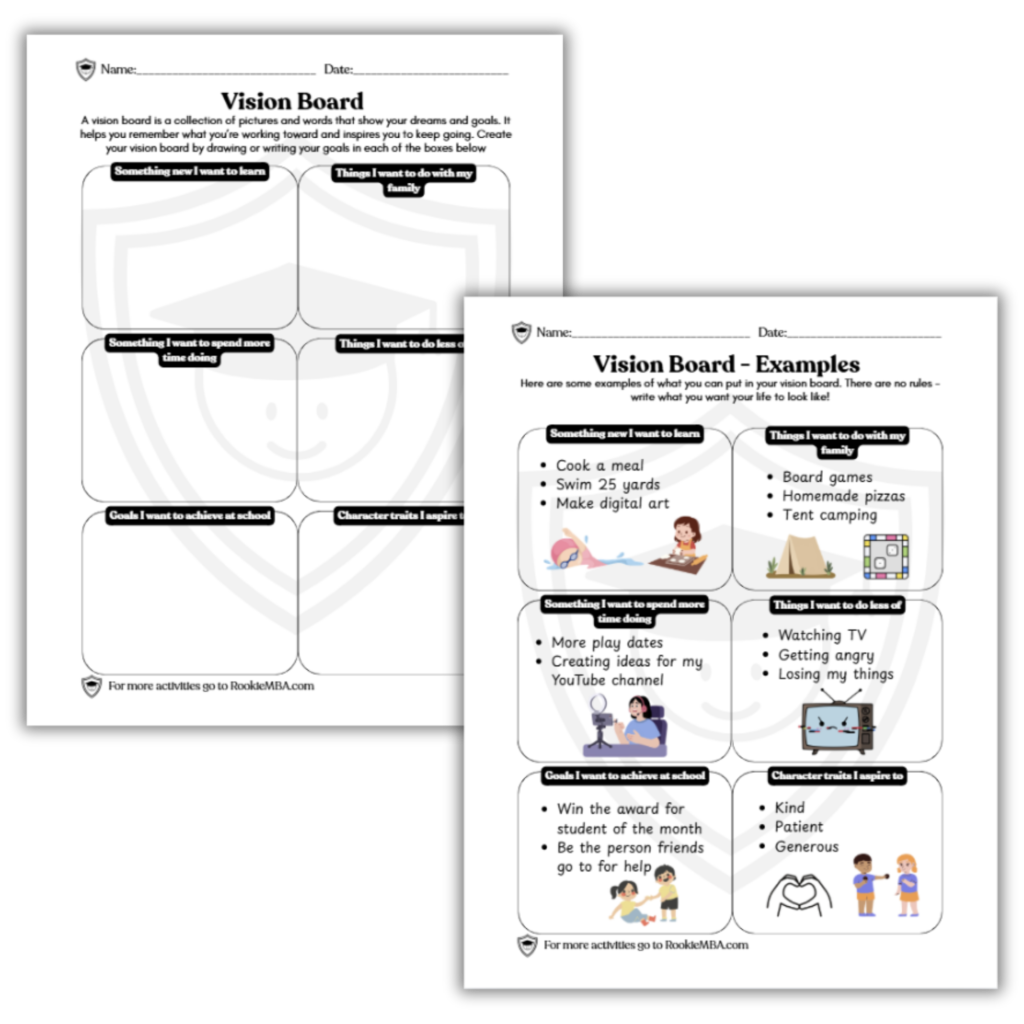
Unlike open-ended collage boards, this worksheet is divided into six focused segments. Children can draw or write in each section, making it accessible for early writers while still useful for older elementary students.
Since it may be the child’s first time making a vision board, these prompts are there to help guide reflection on different life topics.
The second page includes varied examples that may help them complete this exercise. I’ve included both written words as well as images for those that prefer to draw their vision board.
What Is a Kids Vision Board?
A kids vision board is a visual tool that helps children:
- Identify goals
- Clarify interests
- Reflect on habits
- Think about personal growth
- Connect values with actions
For younger children, this may mean drawing pictures. For older kids, it may include short written goals. It’s really just a personal choice.
The objective is not perfection. It is awareness.
What’s Included in This Vision Board Template?
The worksheet is divided into six clearly labeled sections. Each prompt targets a different area of growth.
1. Something New I Want to Learn
This encourages curiosity and skill development.
Examples:
- Learning to ride a bike
- Multiplication facts
- Coding basics
- Playing a musical instrument
This section helps children move from passive consumption to active learning.
2. Things I Want to Do With My Family
Goal setting should not be limited to academics. This prompt reinforces relationships and shared experiences.
Examples:
- Weekly game night
- Cooking dinner together
- Visiting a national park
- Starting a garden
Children learn that time and connection are priorities worth planning for.
3. Something I Want to Spend More Time Doing
This builds self-awareness.
Children reflect on:
- Hobbies they enjoy
- Healthy habits
- Creative interests
Examples:
- Reading
- Drawing
- Practicing soccer
- Building LEGO projects
This section helps shift attention toward intentional time use.
4. Things I Want to Do Less Of
This introduces gentle self-regulation.
Children might identify:
- Too much screen time
- Arguing with siblings
- Procrastinating on homework
The goal is not shame. It is recognition. When children articulate a habit, they begin to manage it.
5. Goals I Want to Achieve at School
This anchors the board in measurable outcomes.
Examples:
- Improve reading level
- Finish homework on time
- Raise math grade
- Participate more in class
For older children, you can introduce the idea of breaking larger goals into smaller steps.
6. Character Traits I Aspire To
This is the most important section.
Skills matter. Character sustains them.
Children may write or draw traits such as:
- Kind
- Brave
- Responsible
- Patient
- Honest
You can extend this conversation by asking:
“What would a responsible person do in this situation?”
This links identity with action.
How to Use This Kids Vision Board Effectively
To get the most from this worksheet:
1. Set Aside Focused Time
Treat it as an activity, not a rushed task.
2. Ask Open-Ended Questions
Instead of correcting, ask:
- “Why did you choose that?”
- “What would help you make that happen?”
3. Display It
Place the finished kids vision board somewhere visible:
- Bedroom wall
- Homework station
- Family bulletin board
Visibility reinforces intention.
4. Revisit It Quarterly
Children change quickly. Revisions are expected.
Who Is This Printable For?
This free kids vision board worksheet printable works well for:
- Homeschool families
- Elementary classrooms
- After-school programs
- New Year goal setting
- Beginning of the school year resets
It can also be used mid-year as a reflection tool.
Final Thoughts
Goal setting should not feel like pressure. It should feel like direction.
A structured kids vision board helps children think about:
- What they want to learn
- Who they want to become
- How they spend their time
- What habits they want to adjust
It is less about outcomes and more about awareness.
Download the free printable, sit down together, and let your child design a small roadmap for growth.